



Exploitation of the Southern Oceans and Antarctica
The future of Antarctica – to consider the contemporary issues of conservation, protection, development and sustainability in a wilderness area.
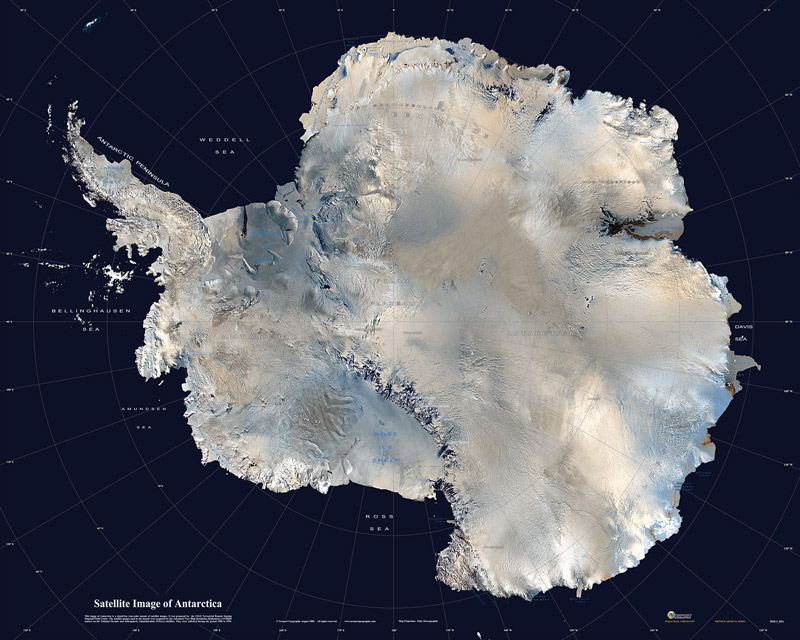
Source. Click for larger image
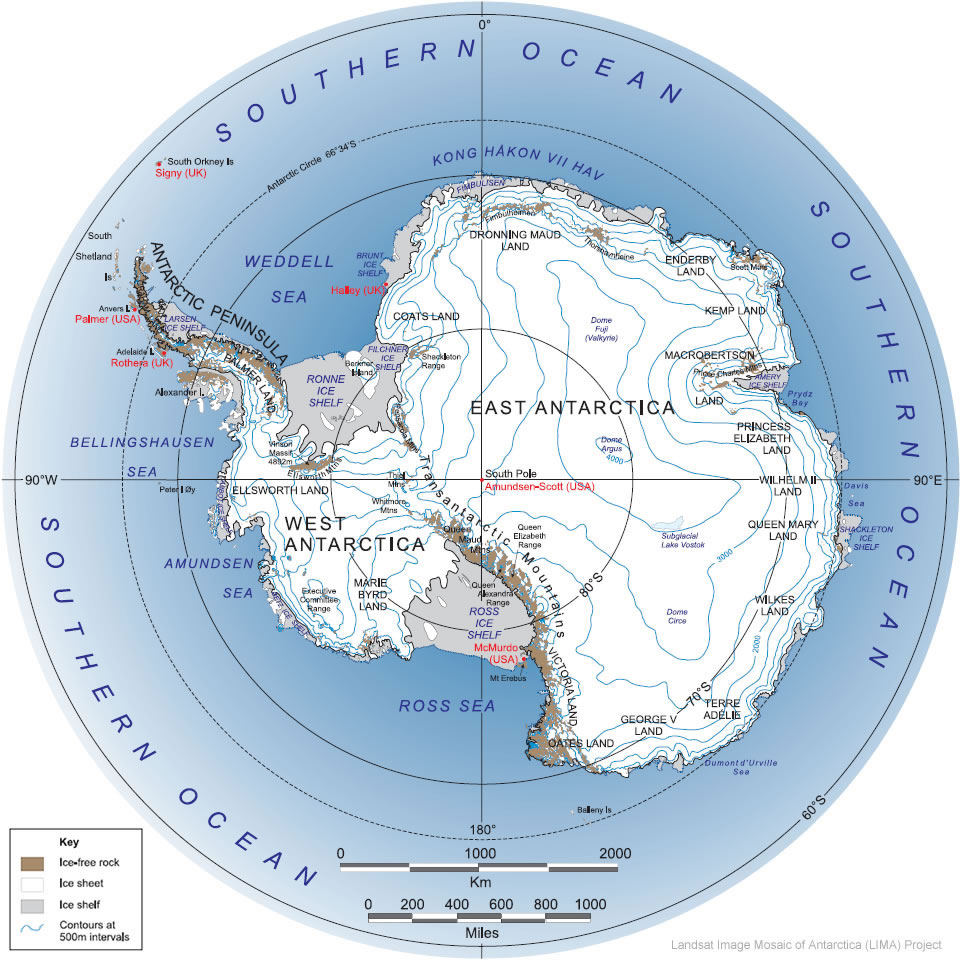
Source. Click to enlarge
Antarctica is a large continent bigger than continental Europe that is approximately centred on the South Pole. The origin of the word means the "opposite of North", and the area is composed of huge ice sheets, continental ice masses, Nunataks (mountain peaks with no ice on them) and ice shelves (areas of floating sea ice). Some of the ice sheets are thousands of feet thick and it is fair to say that on average it is the coldest, windiest and driest place on planet Earth (under 250mm of precipitation per year).
The area has no permanent residents but a number of governments maintain scientific research stations. The number of people living in Antarctica varies from 1000 in winter to 5000 in the summer. The area has long been an area of intrigue for humankind, and the race to the South Pole saw British explorer Captain Scott battle with Norwegian Amundsen to be the first to reach the South Pole at the start of the 20th century.
Fauna and Flora


Protection
Antarctica is one of the last wildernesses on planet Earth and is protected by international law. The Antarctic treaty, signed in 1959, put an end to many claims of sovereignty and set aside Antarctica as a scientific preserve where military activity was banned. The Madrid Protocol of 1998 went one step further, and banned all mining activities in Antarctica. This will be reviewed in 2048 and deposits of gold, iron ore, coal and oil have been discovered, although they are currently uneconomic to mine.
Exploitation and development
Tourism

Tourism is the boom industry in Antarctica and threatens to damage many parts of this fragile environment. Numbers of tourists who mainly arrive by boat are on the increase and pose a threat to the continent.
Whaling
Whaling and sealing have taken place for centuries in Antarctica and the Southern Oceans. The British and Americans used South Georgia Island as a base and in summer the population there could rise to 1000 people. These animals were hunted for their fur meat and blubber, and products such as soap, margarine and oils were derived from whale oil. A pre hunting population was estimated at 275000 whales prior to the 19th century, but this had declined to fewer than 2000 whales by 1964. A ban on whaling has allowed whale numbers to rise. However, Iceland, Japan and Norway would like a return to whaling and already have the right to whale under the current ban for "scientific purposes".

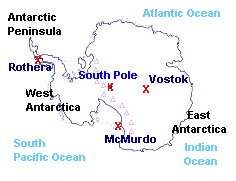
1. A
ttempt this graphing exercise using the map above and the data found here 2. Respond to the statement "Tourism is the biggest threat to Antarctica as a wilderness area". The British Antarctic Survey website will help, the BBC have commented on this issue and you could also look at Cool Antarctica (great website name!)3. Look a the articles from the Antarctic treaty below. Which ones do you agree or disagree with and why? Would you feel the same if you were the President of Chile or Argentina?
- Article 1 - area to be used for peaceful purposes only; military activity, such as weapons testing, is prohibited, but military personnel and equipment may be used for scientific research or any other peaceful purpose;
- Article 2 - freedom of scientific investigation and cooperation shall continue;
- Article 3 - free exchange of information and personnel in cooperation with the United Nations and other international agencies;
- Article 4 - does not recognize, dispute, or establish territorial sovereignty claims and no new claims shall be asserted while the treaty is in force;
- Article 5 - prohibits nuclear explosions or disposal of radioactive wastes;
- Article 6 - includes under the treaty all land and ice shelves south of 60 degrees 00 minutes south;
- Article 7 - treaty-state observers have free access, including aerial observation, to any area and may inspect all stations, installations, and equipment; advance notice of all activities and of the introduction of military personnel must be given;
- Article 8 - allows for jurisdiction over observers and scientists by their own states;
- Article 9 - frequent consultative meetings take place among member nations;
- Article 10 - treaty states will discourage activities by any country in Antarctica that are contrary to the treaty;
- Article 11 - disputes to be settled peacefully by the parties concerned or, ultimately, by the International Court of Justice.