|
Environmental Stewardship
Environmental Stewardship is an agri-environment scheme that provides funding to
farmers and other land managers in England who deliver effective environmental
management on their land.
The primary objectives of Environmental Stewardship are to:
�conserve
wildlife (biodiversity)
�maintain
and enhance landscape quality and character
�protect
the historic environment and natural resources
�promote
public access and understanding of the countryside
�protect
natural resources.
The secondary objectives of Environmental Stewardship are:
�genetic
conservation
�flood
management.
There are three elements to Environmental Stewardship :
�Entry
Level Stewardship (ELS) provides a straightforward approach
to supporting the good stewardship of the countryside. This is
done through simple and effective land management that goes
beyond the Single Payment Scheme requirement to maintain land in
good agricultural and environmental condition. It is open to all
farmers and landowners.
�Organic
Entry Level Stewardship (OELS) is the organic strand of ELS.
It is geared to organic and organic/conventional mixed farming
systems and is open to all farmers not receiving Organic Farming
Scheme aid.
Higher Level Stewardship (HLS) involves more complex types
of management, where land managers need advice and support, and
agreements are tailored to local circumstances. HLS applications
will be assessed against
specific local targets and agreements will be offered where
they meet these targets and represent good value for money.
�Higher
Level Stewardship (HLS) aims to deliver significant
environmental benefits in high priority situations and areas. It
involves more complex environmental management, so land managers
will need advice and support.
�HLS
is usually combined with ELS or OELS options, but unlike these
entry into the scheme is discretionary. A wide range of
management options are offered, which are targeted to support
key features of the different areas of the English countryside.
�HLS
agreements are for ten years. Payments are sent out every six
months and relate to the options that have been chosen. HLS
includes payments for capital items such as hedgerow
restoration.
The application process
�Applying
for HLS involves preparing a
Farm Environmental Plan (FEP).
A consultation is offered to prospective applicants to see if
their holding has any potential before they commit to the
expense of commissioning a FEP.
�Applications
are assessed to see how they meet the environmental priorities
identified in their local area.
�The
Farm Environment Plan (FEP) is a structured survey of all
environmental features on a farm. It involves identifying and
making an assessment of the condition of any features of
historical, wildlife, resource protection, access and landscape
interest.
�The
larger the land area the more money awarded
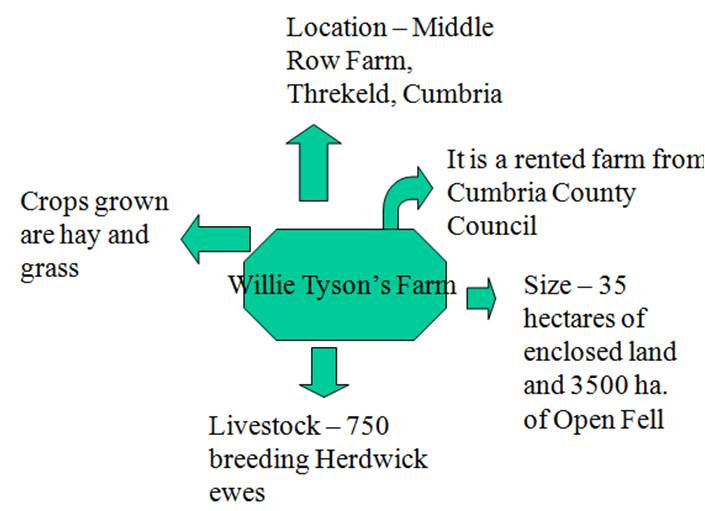
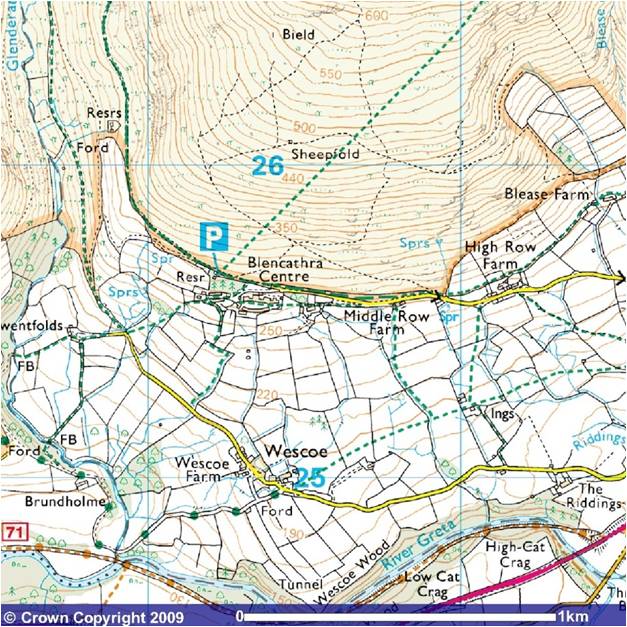
Middle Row Farm, next to Blencathra,
Threkheld, Lake District National Park – William Tysons
farm!
|