



These case studies are all about how the social welfare (well being of the people) of populations is influenced by where they live within a settlement.
Social welfare can be defined as "the well being of the entire society". Social welfare is not so much concerned with STANDARD of LIVING, which is an economic measure, but more to do with QUALITY of LIFE. This means that SOCIAL WELFARE is concerned with factors such as;
-
The quality of the environment (soil, air, water etc.);
-
Levels of crime and drug abuse;
-
Quality of built environment and the dereliction of buildings;
-
Education levels and academic aspirations;
-
The availability of essential social services such as doctors and schools;
-
Cultural and religious aspects of life.
The characteristics of a settlement area affects the environment in which people live and hence their lifestyles, and local governments have to respond to any issues that result.
These case studies focus on Wingrove in Newcastle upon Tyne (an inner city ward) and Longhorsley in (very) rural Northumberland. These are 2 very different settlements within the north east of England. Wingrove in Newcastle upon Tyne is part of a city which has transformed itself from a ship building city to a Science City in recent years.
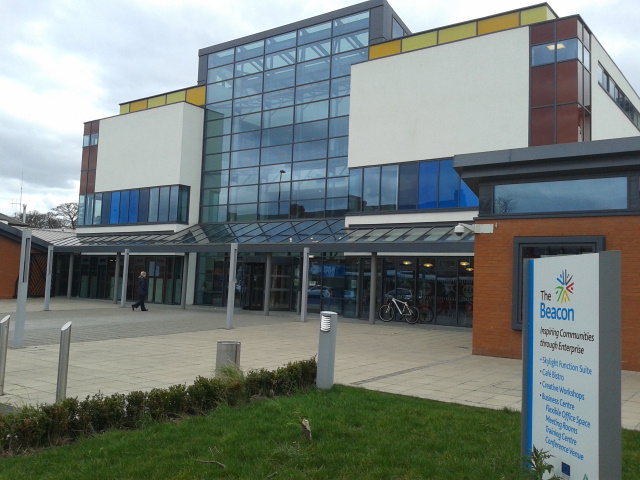
Longhorsley is a rural settlement in Northern Northumberland over 30 km from central Northumberland and 10 km from the market town of Morpeth. South Northumberland is more populated and industrial, but the area Longhorsley sits in is in rural NORTH Northumberland were farming, fishing and other primary activities dominate and population densities are low.
View
Settlement Features Exercise in a larger map - Zoom
out to see all of the settlement areas
Background to the areas
Longhorsley Northumberland
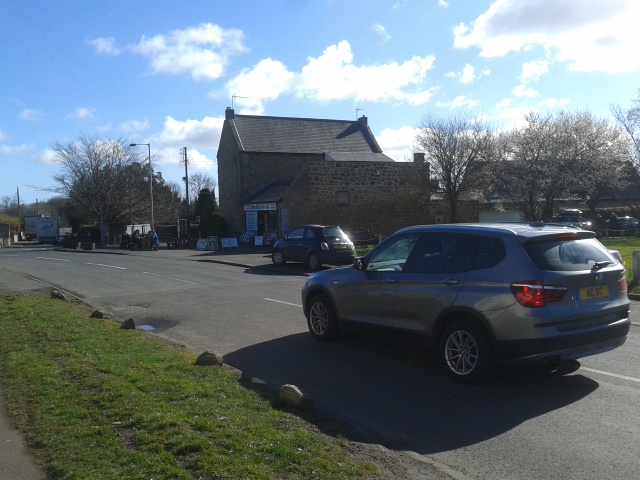
Longhorsley has grown up around its ancient Peel Tower which was built around 500 years ago. It was used initially as a defensive place during the border wars between English and Scottish reivers (cattle raiders). It is a very rural location, with low population densities and surrounded by agricultural land. In the 1950's it had a population of around 500 people who mainly worked in agriculture in the 3 major farms. Many of the farms have now gone and the farm buildings are used as residences for commuters to cities further south such as Newcastle. The population remains around 500 today, but the demographics have changed as has the employment structure.
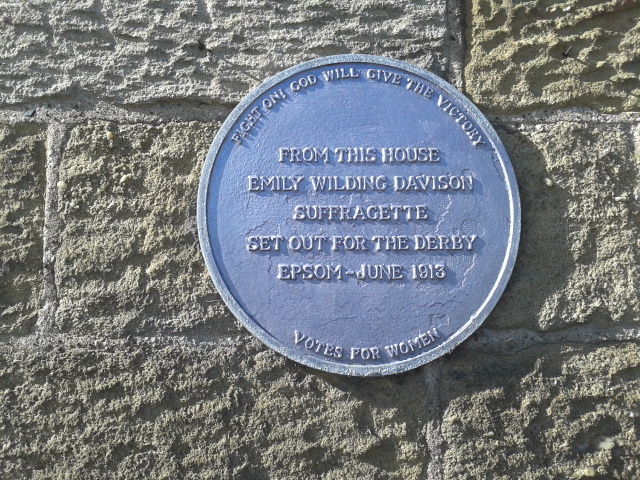
The settlements most famous ever resident was Emily Wilding Davison who was the suffragette who was killed after throwing herself in front of the King's horse in the Derby of 1913, while campaigning for women's right to vote.
Wingrove Newcastle upon Tyne
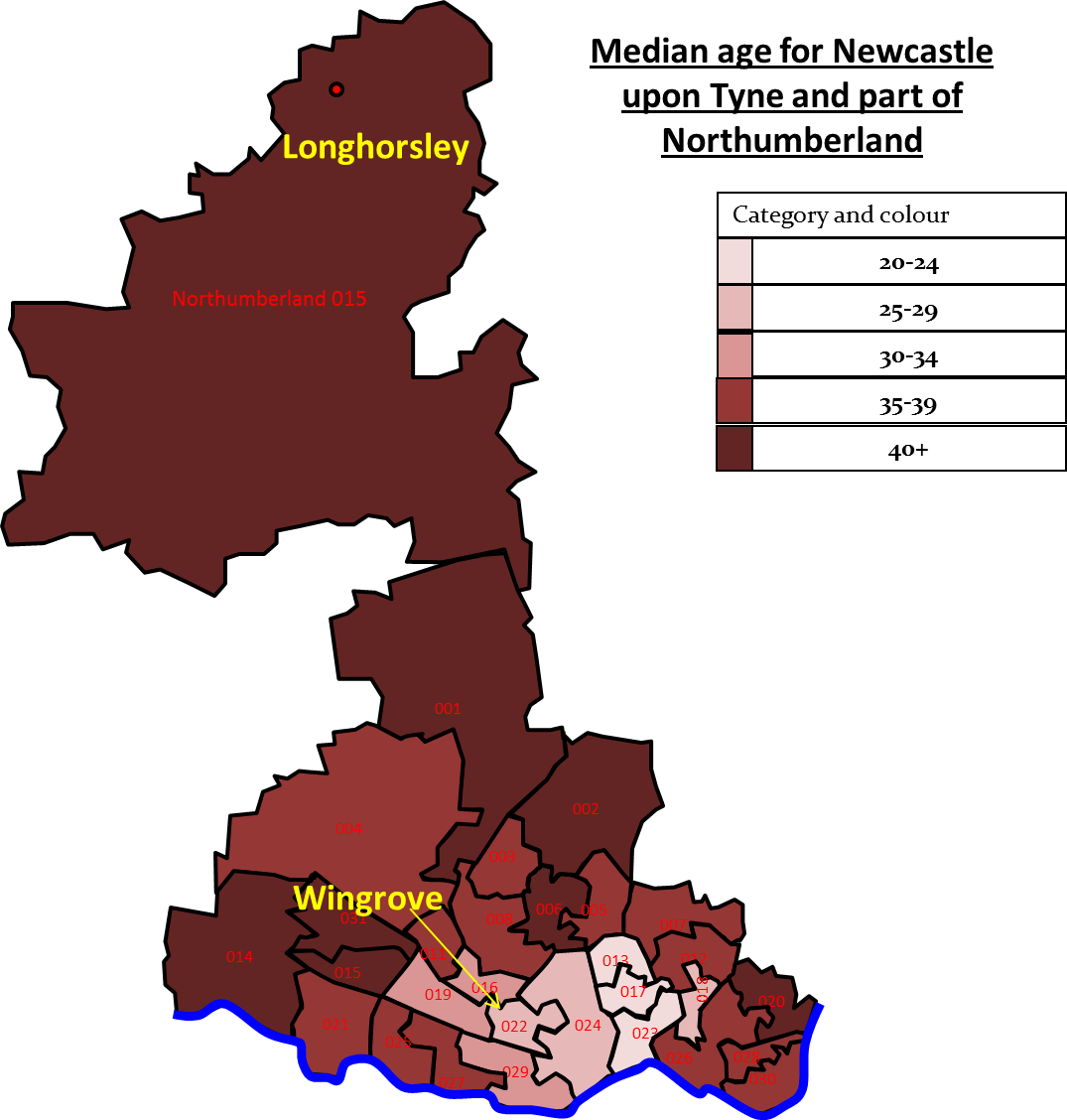
Wingrove is an electoral ward of Newcastle upon Tyne to the West of the CBD. It includes the areas of Spital Tongues and Arthurs Hill, but also Newcastle General Hospital and the wide open space of the Town Moor. Much of the housing is terraced, but there are also areas of semi-detached housing within the ward. Many of the houses are over 100 years old in the ward and it is a very multicultural place.
The
Census of 2011 and our field visit revealed that;
-
Overall environmental quality scores that we took were far higher for Longhorsley than Wingrove, indicating a much better environment with less litter, graffiti, wasteland etc.
-
Building quality surveys also showed that there were more problems with paint peeling, broken windows, tiles missing, unkempt gardens etc. in the buildings in Wingrove than in Longhorsley.
-
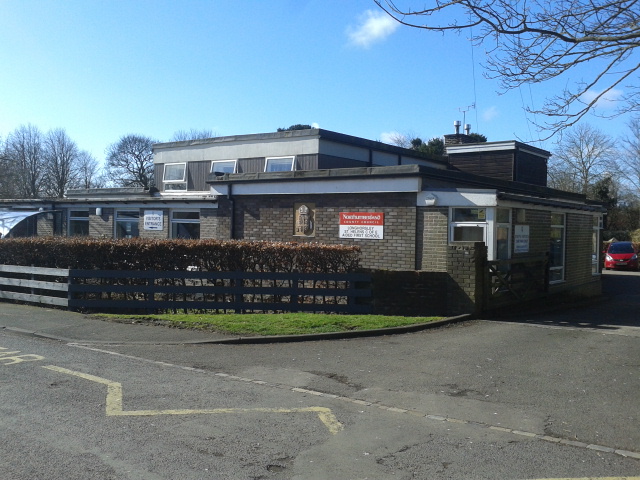
There are more services in Wingrove than in Longhorsley. In Longhorsley many of the services are of limited duration such as Fish and chips available every Friday and a youth club. there is also a shop, a hairdressers and a pub (the excellent Shoulder of Mutton). In addition there are bus services and a First school (St Helens, picture below).
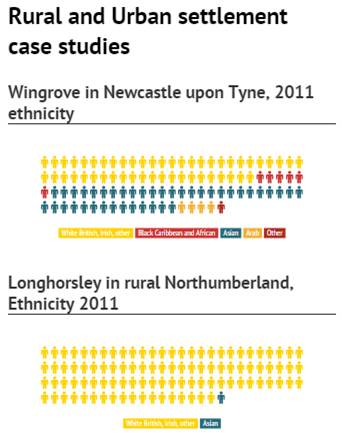
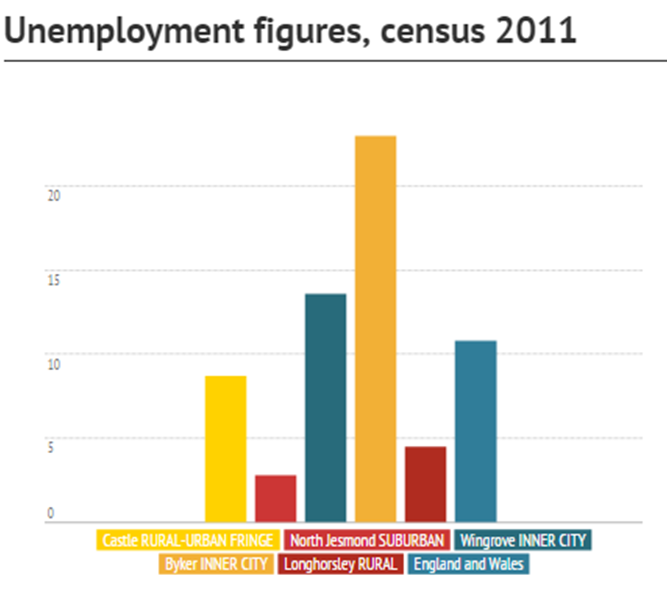
The census 2011 shows that;
Management of Implications for Social welfare
1. John Marley centre – opened by the WECC to encourage community
cohesion and improve education standards in the West end
2. Excelsior academy – a brand new school with state of the art
facilities has been built to raise academic standards
3. £265 million redevelopment project in West End – creating 1,800 high
quality, eco-friendly family homes with new neighbourhood and commercial
facilities, parks and public open spaces over the next 15 years.
4. Few services for people in Wingrove – apart from a shop and the primary school little else is there so kids have to travel 7 miles for secondary schooling and there is no local doctor
5. The shopping and leisure facilities are more wide ranging in Wingrove than Longhorsley
6. There are health issues as people live longer in Longhorsley
7. The physical environment is not as attractive in Wingrove so people do not have as nice a place to live.
9. Attempts are being made to improve social welfare in Longhorsley and there is strong community spirit and Broadband has even arrived!

Despite this there are many unresolved issues including the poor service provision in Longhorsley, and huge deprivation in Wingrove