



Sustainable tourism,
myth or reality?
The
idea of sustainable tourism was proposed at the
first Earth Summit held in Rio in 1992. In the
following Agenda 21 process, travel and tourism
was one of the industries identified as having
the potential to make a positive contribution to
a healthier planet.
Sustainable tourism can be defined as “Tourism
that takes full account of its current and
future economic, social and environmental
impacts, addressing the needs of visitors, the
industry, the environment and host communities”
(UNWTO, 2004).
The
roots of sustainability come from the idea of
sustainable development
introduced by the Bruntland Commission in the
1970s and stated that "sustainable
development is development that meets the needs
of present generations without compromising the
needs of future generations to meet their own
needs."
Sustainable tourism
should;
·
Support a wide range of local economic activities, taking environmental
costs and benefits into account.
·
Should not be permitted to become an activity which dominates the
economic base of an area (other industries
should exist alongside).
·
Allow the participation of local communities
·
Involve indigenous people, women and minority groups to ensure the
equitable distribution of the benefits of
tourism.
·
Respect the culture, the economy and the way of life, the environment and
political structures in the destination area.
·
Educate all involved people (stakeholders) about the need to develop more
sustainable forms of tourism.
Questions to
consider about “Sustainable tourism: myth or
reality?”;
1.
Can Tourism ever really
be sustainable?
2.
Can people “leave only footsteps and take only memories”?
3.
How do we
attract and service the greatest number of
tourists without causing irreparable change or
damage to the destination’s resources?
4.
Is the
idea of sustainable tourism one that can truly
be achieved in a practical, profit driven world?
5.
Is
sustainable tourism a myth or a reality?
6.
Does the
level of development of a place affect the
possibility of sustainable tourism?
The Myths
1.
Tourism is a huge source
of income for many countries who will sacrifice
environmental concerns in order to boost GDP and
attract overseas income. This means that many
areas will exceed their “carrying capacity”, the
ability of the environment to absorb the impact
of the tourism.
2.
INTERNATIONAL Mass
tourism is the most popular form of tourism as
it is the most practical and cheapest form.
It is also the most damaging for the
environment and least sustainable.
3.
The increase of
international tourism is hugely unsustainable.
This results in very damaging forms of
transport being used such as the aeroplane.
According to the World
Tourist Organisation 1.1billion people arrived
as international tourists in 2014 and generated
US$1.5trillion in export earnings.
4.
Tourism can be
considered to be ECONOMICALLY unsustainable, as
tourist resorts can follow the Butler life cycle
model and end up in a decline situation.
This has been the case in Blackpool which
has had to work very hard to combat this.
5.
Tourism can have many
negative impacts SOCIALLY, from the increase in
drug use and prostitution to cultural dilution
and pollution.
6.
Extreme tourism is on
the increase which places pressure on FRAGILE
environments that have less capacity to cope.
Again tourism having a negative impact
7.
LEDCs have less capacity
to cope with the impacts of tourism than MEDCs
Realities
1.
Sustainable tourism
offers poor countries a way out of poverty and
an opportunity to protect their natural
environment.
2.
Sustainable tourism
offers an alternative to the highly damaging
effects of mass tourism
3.
Richer countries have
developed over time a tourism that can be
sustainable both economically and socially
although problems remain.
The Lake District National Park is a good
example of this.
4.
Sustainable tourism
offers people a way of using their cultural and
social skills in a positive way within their
local environment
5.
Tourism is a labour
intensive industry that creates millions of jobs
worldwide, attracts significant foreign income
and investment, and is one of the most promising
drivers of green growth for the world economy.
6.
Local tourism and
“Stay-cationing” can limit the damaging impacts
of
7.
Sustainable tourism has
meant that people are more educated today than
two decades ago about the impacts of tourism.
8.
Money generated from
tourism is being re invested into protecting the
environment and ensuring local culture is not
lost.
CASE STUDIES
There is some decent case study material found
at the following GCSE links;
Sustainable management of mass tourism in the
Lake District National Park
Attempts at sustainable management of mass
tourism in the tropics – Jamaica
Sustainable management of the Galapagos Islands
Problems and management in Extreme Environments
- Antarctica
Unsustainable
Tourism;
The case of
Ibiza
Ibiza is a major holiday
destination in the Balearic Islands directly
south of Barcelona and South West of Mallorca in
the Mediterranean Sea.
It has 210 kilometres of shoreline and 53
beaches. In the 2001 census, the Island had a
resident population of 88,000 people, by 2010
that had grown to 133,000. This Mediterranean
Island is under unsustainable pressure from mass
tourism as 6,000,000 tourists flock to the
popular island each summer. The island not only
has a classic Mediterranean climate but also a
legendary and at times riotous nightlife in
Ibiza Town, the island's capital on the southern
shore and Sant Antoni to the West. In the last
decades Ibiza and Formentera tourism industries
have undergone explosive growth; this massive
flow of tourists in a short period of time
exceeds the capacity of the islands’
environment, and has generated a huge demand for
land, water and energy, while producing an
increasing volume of wastes.
In 2007 a panel of more than 500
tourist experts rated Ibiza worst out of 111
islands around the world in terms of tourism
impact.
According to
Ibizaconservationfund.org the current issues of concern
relating to tourism include:
-
Transformed
coastlines and inland landscapes
– as tourist
resorts spring up around the coast and
spread inland, destroying natural habitat.
-
Large transport
infrastructure
– plans exist to expand the airport to over 1 million passengers a
year and a macro port has been built that
UNESCO say has posed an unacceptable threat
to Posidonia meadows declared World Heritage
site
-
Loss of important
habitats and biodiversity
– many are
under threat due to increasing mass tourism,
including the Balearic Shearwater bird and
marine habitats such as the Ses Salines
prairies
-
Water scarcity and
pollution
- water demand from mass tourism has led to depleted and polluted
aquifers and to a growing dependency on
desalination plants
-
Increased
pollution due to soaring energy use
–energy use
has gone up 70% in the last decade
-
Increased waste – in the summer most sewage is
dumped in the sea as plants cannot cope with
the volumes
-
Loss of rural
landscapes, agrobiodiversity and traditional
knowledge on sustainable resource management
– people have
abandoned farming in favour of tourism based
activities
-
Loss of cultural
heritage
- Dalt Vila, declared cultural UNESCO
World Heritage site in
1999, abounds in beautiful – and derelict –
buildings. Archaeological sites, largely
ignored, are being destroyed by
road-building and urban development.
The Island is also under
threat from oil drilling in the Mediterranean
Sea and Forest fires.
Ecotourism is a very important
part of the tourism industry in
Peru.
In the East you can
take part in Eco-tourism activities in the
Amazon Basin, as found along the Madre De Dios
River near to Puerto Maldonado. Peru has
some fantastic coastline as well, but the
highlight of Peru is undoubtedly the Inca Trail.
Peru’s considerable
natural resources and
historical attractions make it
critical that
sustainable
tourism is a focus of the
industry.
Ecotourism in Peru is a
diverse segment of the industry, and includes
conservation and preservation efforts of historical
landmarks, nature, and communities, through
economic and socio-cultural initiatives and
dedicated tour operators. Birdwatching is a
treat in Peru, particularly because of the
mighty
condor, an iconic and mammoth
bird often spotted in the Colca Canyon.
Similarly,
orchid
lovers will thoroughly enjoy Peru and its
approximately
3,000 species of orchids,
scattered in places like Callejon de Huaylas
valley, and Machu Picchu. Research estimates put
the number of
butterfly
species in Peru at 4,200.
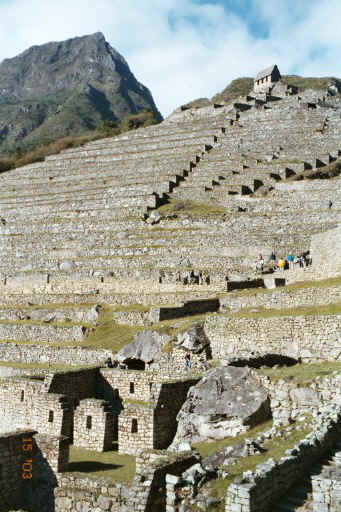
In 1911 American explorer Hiram Bingham was led
to the former Inca settlement and tourists have
been visiting ever since.
You can take
a virtual field trip
of the Inca Trail
here. The trail basically covers 43km of
old pathways linking together old Inca
settlements in the inhospitable mountains of the
Andes. It is South America's best known
trek and is one of only 23 World Heritage Sites
(as deemed by UNESCO) to be classified as
important both naturally and culturally.
The rail is covered in 4 days and finishes with
sunrise at the "Lost City of the Incas" at Machu
Picchu. The trail is strictly controlled,
and only 500 trekkers are allowed to start out
on the trail every day.
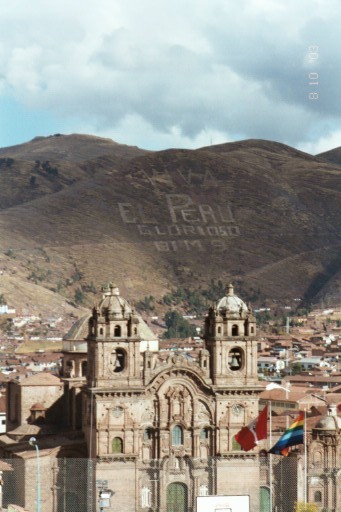
Additionally, Machu Picchu is home
to a number of Peru's exceptional natural
species, all of which require their natural
environment to be considerate and undisturbed.
During a trek along the Inca Trail, the
following is absolutely prohibited:
·
Littering
·
Lighting campfires and cooking over an open flame
·
Spending the night in archaeological sites
·
Gathering plants, flowers, insects, and animals along the route
In addition;
·
The Inca Trail is closed for the rainy month of
February.
·
Regulations limit the Trail to 500 trekkers a
day, including tour guides, porters, and cooks.
·
Trek permits are needed to walk the trail to
protect it
·
There are strict
regulations on behaviour on the Inca Trail as
well as in Machu Picchu, commanding respect and awareness of the
fragility of the site due to human visitation.
·
Tourists are
advised how much to pack in order to limit the
weight local porters have to carry
·
Local guides
provide an educational element to the trip
Many of the guides and porters are from local
communities and they supplement their farm
income during the trekking season, this vital
income supports their families.
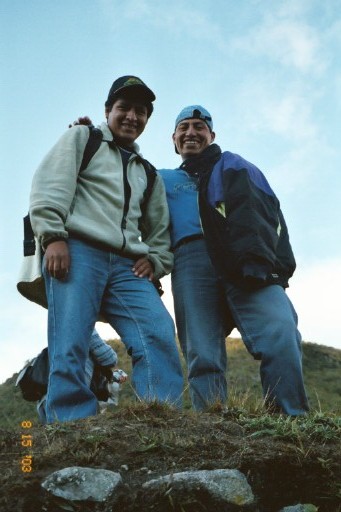
There is also ecotourism in the Peruvian Amazon.
I stayed in
ecotourism lodge in Puerto Maldonado in Peru,
where tours of the Amazon forest take place for
tourists staying in small wooden huts there is
limited electricity and waste is dealt with on
site, and the food at the resort is sourced
locally.
All of the guides were local and the
tours were educational.
