



The European Union is a group of 27 countries that have
common goals and close ties to one another.
It
is an economic, social and political partnership
where the countries delegate part of their
governance/competences/sovereignty to supra
-national institutions (the European Central
Bank and the European Parliament for example).
The EU started as a trading union Between France,
Germany, Italy, Belgium, Luxemburg and the
Netherlands with the added incentive of
sustaining peace in Post-World War 2 Europe.
Over time the Union has grown, adding a
common market of the European Economic Community
(EEC) in 1957.
The UK joined in 1973 and the EU has
slowly expanded ever since.
The EU has a significant impact upon the
lives of EU citizens because;
·
It has policies
in place to control food production under the
Common Agricultural Policy
·
It can determine
national law through the European Court of
Justice
·
It controls and
allows free movement of EU citizens throughout
member countries
·
It promotes
easier trade between EU countries so boosting
economies
·
It can bail out
countries in financial trouble through the
European Central Bank
·
It makes big
decisions in a democratic way through its
elected MEPs at its parliaments in Brussels and
Strasbourg
·
It passes laws
protecting people’s rights and the environment
·
It tries to even
out differences in development between richer
member states and poorer member states.

The 3 pillars
of the EU
These were the
3 legal principles that the EU was organized
around between 1993 and 2009, they were;
1.
The European
Communities pillar
2.
The Common Foreign
Policy and security pillar
3.
Police and judicial
cooperation pillar.
These have been
replaced
but you can
find out more here.
|
|
Key events |
Link to
Geography? |
|
2013 |
Accession of Croatia |
|
|
2009 |
Lisbon Treaty
abolishes the
three pillars of the European
Union |
|
|
2007 |
Accession of Bulgaria and Romania |
More migration – but
this time the UK imposed limits and
opted out of immediate mass migration |
|
2005 |
France and the
Netherlands reject the possible European
Constitution |
National sovereignty
put ahead of the Union by the people of
the EU |
|
2004 |
Accession of ten countries from the East of Europe
including Poland and Lithuania
|
Mass migration, for examples, the 600,000+ Polish people that migrated between 2004
-6 to the UK |
|
2003 |
The first troops are deployed under the
European Security and Defence Policy
(ESDP), following its creation in 1999.
The troops are deployed to take over
from a NATO mission in FYR Macedonia. |
EU emerging as a
conflict resolver? |
|
2002 |
The euro replaces
twelve national currencies |
Integration of
trade,
fewer barriers to trade, loss of
economic control for individual
countries |
|
1999 |
On 1 January, the
Euro is launched as the official
currency in (11 out of the 15 EU member
states), but remains “virtual” until
2002 |
|
|
1998 |
The European Central
Bank (ECB) is established in Frankfurt,
Germany. It is responsible for setting
monetary policy for the Euro countries
and managing their foreign reserves. |
More economic union
– so development gap can be narrowed |
|
1995 |
Accession of Austria, Finland and Sweden |
Migration! Freedom of movement for people, more difficult to control illegal
immigration |
|
1993 |
Copenhagen criteria
defined - that a state has the
institutions to preserve democratic
governance and human rights, has a
functioning market economy, and accepts
the obligations and intent of the EU. |
Political Geography –
democracy essential element of trading
bloc membership.
People benefit from preservation
of human rights. |
|
1992 |
Maastricht Treaty -
The European Union is born. |
Economic Geography – even
more free trade within the union and the
exclusion of those outside of it. |
|
1989 |
The fall of the Iron
Curtain in Eastern Europe |
East Germany
reunified with West. |
|
1986 |
Single European Act
signed aiming to complete the formation
of a common market; |
Flags and Geography! |
|
1981 |
Accession of Greece |
|
|
1979 |
First direct
elections to Parliament |
EU as a
political
union not just an economic one |
|
1977 |
Customs duties between the nine EC
members are completely abolished. |
|
|
1973 |
Accession of Denmark, Ireland and the UK |
|
|
1967 |
ECSC, EEC and Euratom merged to become
collectively known as the European
Communities (EC). |
|
|
1963 |
Ankara Agreement
initiated a three-step process toward
creating a Customs Union which would
help secure Turkey's full membership in
the EEC. |
|
|
1963 |
Charles de Gaulle
vetoes UK entry |
|
|
1962 |
The EEC adopts regulations providing for
a common market in agriculture, along
with financial regulation and rules
governing competition. |
Trade integration |
|
1957 |
Treaty of Rome
creates European Economic Community and
European Atomic Energy Community
(Euratom) |
|
|
1953 |
A common market for coal, iron ore, scrap
iron and steel is formally established
in Europe. |
|
|
1951 |
Treaty of Paris creates the European Coal
and Steel Community (ECSC).
Signed by
Belgium, France,
West Germany, Italy, Luxembourg and the
Netherlands (the 'Original Six').
The European Court of Justice (ECJ) is
established. |
Trade integration – the goal to increase
trade and make a return to war
improbable |
|
1945 |
The end of World War
II |
|
The general pattern is one of an ECONOMIC CORE of
countries where businesses thrive; people have
lots of opportunities and are relatively
wealthy.
This includes large parts of the UK,
Germany, France, Austria and Italy.
Outside of this area is the ECONOMIC
PERIPHERY, those areas on the edge of the core
that have fewer industries, lower standards of
living and fewer opportunities for the people
who live there.
These Continental patterns hide further
patterns within countries, with the UK being a
good example.
The core area for the UK is London and
the South East, whereas the North of Scotland
and the NE of England Can be considered to be
PERIPHERAL areas.
Comparing Poland and the UK, 2012 data (CIA Factbook)
|
|
Poland |
UK |
|
Date of entry into the EU |
2004 |
1973 |
|
GDP |
9,600 |
27,900 |
|
Life expectancy
|
76.25 |
80.15 |
|
Number of doctors per 1,000 people |
2.1 per 1000 |
2.7 per 1000 |
|
Unimproved sanitation access |
10% |
0% |
|
How much of GDP is spent on Education? |
4.9% |
5.5% |
|
Unemployment rate |
12% |
7.8% |
|
% of population below poverty line |
17% |
14% |
|
Population in Millions |
38.4 |
63 |
The attempts by the EU to reduce these
different levels of development.
The differences in development across
the European Union can be considered to be
UNSUSTAINABLE because they promote too much
growth and possible environmental problems in
the CORE, whilst resentment of the wealth of the
core and out migration can happen from the
periphery.
The EU has tried to deal with these
inequalities in a number of ways;
1.
The Common Agricultural Policy
– this
was a system of subsidies or money paid to
farmers, often the poorest people within the EU.
The goals of the CAP were to;
·
Guarantee and maintain agricultural employment and wages
·
Guarantee food production
·
Stabilise food prices
This system led to massive over
production of goods and damaging impacts on the
environment but did produce reliable food
supplies.
It has been criticised because it
consumes a huge amount of the EU’s budget
without contributing much to the economy.
It has been changed to promote more
environmentally friendly farming and to reduce
production to sustainable levels.
2.
The European Investment Bank – This is the
bank of the EU that provides finance and expertise for sustainable investment projects
in Europe and beyond. It is owned by the EU
Member States and tries to support EU policy
objectives. It is the largest multilateral
lender and borrower in the world. It has
invested €9 billion into Innovation up to 2012
and promised an extra €60bn between
2013-2015 to promote sustainable growth and jobs
to try and finish the economic crisis across the
EU. They also invested in 200,000 Small and
Medium Enterprises across the EU in 2012.
3.
Urban II Fund
Cities play a major developmental role in the EU,
and almost 80 % of the European Community's
citizens today live in cities. Many of these
cities succeed, but others are faced with social
and economic problems.
Various strategies have been tried to
combat these problems and Urban II is one of
these.
It is paid for by the Commission and the
Member States. For 2000-06, the Community's
contribution to the initiative amounts to EUR
730 million, exclusively from the ERDF (European
Regional Development Fund), for a total
investment of EUR 1.6 billion, covering a
population of some 2.2 million. To qualify areas
must meet at least three of the following conditions:
·
a low level of economic activity and a specific need for conversion due
to local economic and social difficulties;
·
a high level of long-term unemployment, poverty and exclusion;
·
a low level of education, significant skills deficiencies and high
drop-out-rates from school;
·
a high number of immigrants, ethnic and minority groups, or refugees;
·
a high level of criminality and delinquency;
·
precarious demographic trends;
·
a particularly degraded environment. (source –
europa.eu)
Examples of how this funding is used in Newcastle
are listed below.
4.
Structural Funds
The Structural Funds
are a way for the
European Union (EU)
to narrow the
gaps in development among regions and Member States.
The structural
funds are therefore very important for the EU in
trying to help all countries have reasonably
even social and economic opportunities.
For the period 2007-2013, the budget allocated to
regional policy amounts to around € 348 billion,
comprising € 278 billion for the Structural
Funds and € 70 billion for the Cohesion Fund.
This represents 35% of the Community budget and
is the second largest budget item.
European Union funding in Newcastle
European funding in Newcastle comes from three different places:
1.
European
Regional Development Fund (ERDF), supports the growth of a
modern, innovative and sustainable economy. It
aims to strengthen the entrepreneurial culture,
grow the business base and exploit the science,
new and renewable energy technology and
innovation potential across the city and the
region.
2.
European
Social Fund (ESF) aims to help people fulfill their potential by giving
them better skills and better job prospects.
3.
European Transnational Programmes support European Co-operation between countries
How do we use
European Funding in Newcastle?
In Newcastle public, private,
voluntary and community groups use European
funding to co-fund different types of capital
and revenue projects:
-
supporting innovation and technology-led
sectors related to Newcastle Science City
and strategic sites,
-
cultivating an enterprise culture and enhancing
the competitiveness and growth of existing
Small & Medium Enterprises across the city
including its disadvantaged areas,
- improving the city's environment and
sustainability in the field of sustainable
transport and energy efficiency.
Some past and current projects in Newcastle, supported by
the European Union
1.
Newcastle Enterprise Package is a programme to get new businesses started
in Newcastle.
It has a
£3M budget from the EU
to support the development, growth
and sustainability of enterprise throughout
Newcastle.
2.
The Toffee
Factory – a creative work space in the Ouseburn valley, home to companies and with
excellent transport links.
Funded by the local council and the
European Union.

3.
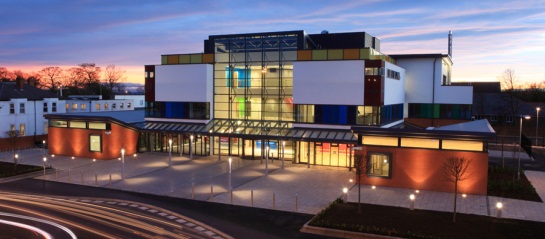
The Beacon (Centre West
and Groundwork) – funded to provide office space
and meeting facilities in Newcastle’s west end
4.
Newcastle Science City - Newcastle was
designated as one of six UK Science Cities in
2005 in recognition of the world-class research
being undertaken by its universities and the
potential of its science industry base. The city
has three main areas of excellence: Ageing &
Health, Sustainability and Stem Cells &
Regenerative Medicine. Each area has a number of
locations dispersed across the city.
This is a partnership between
Newcastle University, Newcastle City Council and
the European Regional Development Fund (who put
in £2.3 million).
It includes the centre for life and
Science Central, which will be a huge
development area close to St James Park.

5.
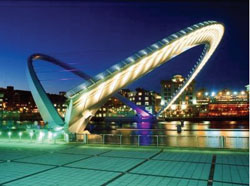
The Millennium Bridge – part
funded by ERDF who put in £3million,
The Millennium Commission put in £9.8m together with contributions from
English Partnerships, East Gateshead Single
Regeneration Budget and Gateshead Council.
The African Union
Trading Blocs are not just for the powerful
countries, they can represent countries at lower
levels of economic development too like the
Group of 77 or the African Union.
The African Union
(AU)
consists of 54 African states (Morocco is the
only nonmember). It replaced the Organisation of
African Unity (OAU) in 2001 in Addis Ababa. It
has 14 objectives including;
·
To promote sustainable development at the
economic, social and cultural levels as well as
the integration of African economies.
·
To accelerate the political and social-economic
integration of the continent.

EU evaluation chart