



6. Flooding by rgamesby
Rivers flood for a variety
of different reasons, and very few rivers have the same background
characteristics. The reasons
why rivers flood can be divided into HUMAN and PHYSICAL (or Natural)
characteristics.
Physical reasons for river flooding.
Precipitation type, amount
and duration is the most obvious reason for river flooding.
Long steady prolonged rainfall will produce
rivers which rise slowly but can flood, whilst heavy short showers can
cause rivers to rise quickly and burst their banks.
Snowfall is another factor to take into account,
river levels fall in the UK as precipitation is often stored as snow
during cold snaps.
However, when temperature warms and that snow
melts many days worth of precipitation can end up in rivers and cause
flooding.
The relief of the land can
also have an impact.
Steep slopes tend to reduce the amount of
infiltration of water into the ground, this water can then flow quickly
down to rivers as overland flow.
In addition, steep slopes also cause more
through flow within the soil.
Both can raise river levels.
Gentle slopes or flat land allow water to
penetrate into the soil and increase lag times.
Vegetation type and
coverage plays a big role, with forests intercepting more rainfall than
grasses.
This interception increases lag time and reduces the risk
of a flood.
Indeed, deforestation (the removal of trees) can
increase soil erosion, reduce interception and increase flood risk.
Afforestation, where trees are planted, can
have the opposite effect.
Soil and rock type can
also influence what happens to precipitation when it reaches the ground.
Impermeable soils and
rocks such as clay or shale do not allow water
to infiltrate, this forces water to run off reducing river lag times and
increasing flood risk.
Permeable rocks allow water to infiltrate into
them.
If permeable rocks allow water in through cracks,
fissures and bedding planes but not through their pores they are said to
be pervious (such as limestone).
Porous rocks allow water to penetrate into their
pores such as sandstone.
Temperature
Human reasons for river flooding
Urbanisation can cause
flooding because many of the surfaces in
Deforestation
Increases in population
density
Patterns

Flooding in Tewkesbury

Deforestation in Madagascar - this could lead to flooding

Areas at risk of flooding in the UK

Source
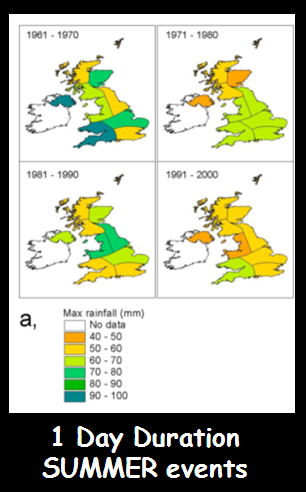
Describe the patterns on the 2 maps below showing rainfall patterns for:
a) One day rain events in summer
b) 10 day rain events in winter

This resulted in extensive flooding in the UK, even in Newcastle upon Tyne on "Thunder Thursday" - case study resources below;
Causes - watch these BBC tutorials on why the weather has been so poor throughout the summer of 2012 and why Thunder Thursday happened
Slide show of images
Evening Chronicle gallery of images
Watch the lightning strike that hit the Tyne Bridge
Met office article on the evolution of the storms
Responses - Environment Minister Caroline Spelman visits the NE
The exceptional rainfall of 2012 eventually resulted in extensive flooding across England and Wales. Saturated soils could not cope with the rain brought by depressions across the Atlantic and the map below shows how widely distributed the flooding was.

Above - Distribution of flood warnings in place on 30th of December 2012-12-30

