
|
|
||
| Back to Main Page | Back to GCSE Page | Back to Human World Menu |
Population Growth
Experts predict that by the year 2050 the world’s population will be a staggering 10bn. Will there be too many people?
Recent research shows that global population is increasing rapidly. The population has almost doubled since 1960 and since 1990 the world’s population has increased by around 4 billion people. However further research shows that the majority of new births are going to take place in LEDC’s (lower economically developed countries). The global population currently stands at around 6.1billion, but experts predict that it will continue to increase.
As it stands today in the UK and other developing countries, the population growth has either stabilised or stopped. Unfortunately this is not the case in LEDC’s, as the population growth is higher now than ever, with a staggering 300% population increase in Africa since 1960. Even though the HIV virus has cut life expectancy by almost 12 years, the population is still on the up.
There are many different reasons why the population is increasing. Even in LEDC’s, there is now a more reliable form of medical treatment available, and sources of food and clean water and also not so scarce. But a major part of why the population is rising has to be the lack of knowledge about contraception. Without the use of contraceptives the population will inevitably rise.
The rise in population will have a major effect on the poorer areas of the world. As the population doubles so does the need for facilities. There will be more people per sq. kilometre, so there will be mass overcrowding and a severe lack of space. As food will need to be mass-produced the quality of food will diminish, which could lead to further malnutrition, as water is also scarce. More factories will be needed to provide for the people, which could lead to excess pollution. Human waste may also become a problem.
In countries such as Mauritius and China, plans to try and contain their population growth have already been installed.
China
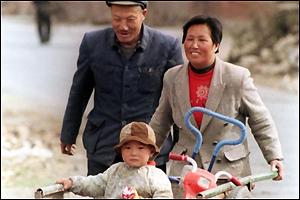
In China there is a one child per family policy. This is where every family can have only one child, but they must ask permission from their bosses at work. They also have to be over 24 before they can get married. If allowed to have a baby the family are issued with a card; this card is very important, as the child cannot be registered without it. However families are allowed to have a second child, but the family must pay for everything; unlike the first child, where the government pays for everything. Some people do not agree with China’s new crash programme, "I have heard about forced abortions by supposed ‘family planning helpers’". This is a comment by Michelle a newspaper reporter who heard of an incident where a woman in China had to undergo an unwanted abortion because it was her second child. Some people, like Michelle think China’s actions are rather drastic, but as drastic as they are, their actions are affective. If the new regime is followed for around 100 years china’s population will have halved.
Mauritius
In the 1960’s Mauritius had the fastest growing population and their main way of life, growing sugar crops, was becoming impossible to support the country because there was not enough space to grow any new crops. So, Mauritius introduced a new system of family planning and each family was allowed between 3 to 6 children. However this system was not working as effectively as they had hoped because the momentum (where the new children being born, grow up and have their own children etc..) caused the population to double to its current, 1.1 million people. However, due to the economic problems of the country they were forced to launch a de-rocking scheme to clear more land. This land was used to build factories and Mauritius become industrialised. There were sufficient workers so they were able to cope and adapt to the new way of life. The facilities doubled and they were once again able to support their population. In the long run Mauritius’ population became a resource not a burden.
For more information see
Arcadia
University
Refugee council report on the policy