Back to Main Page Back to GCSE Page Back to Hazards Menu

Orissa Cyclone – A tropical storm in an LEDC

Location

On 29th of October 1999, a cyclone (hurricane) emerged from the Bay of Bengal. With winds up to 300 km/h and 30 feet tidal waves, it affected the state of Orissa for more than 36 hours. The impacts on people and the environment were massive because of poor preparation.
Tracking map of the Orissa cyclone

Effects

•20,000 people and 700,000 cattle died.
•90 million trees have been uprooted or damaged.
•20 million people were made homeless
•5 million farmers are out of work
•1.2 million hectares of standing cropland were destroyed.
•£1.5Billion damage
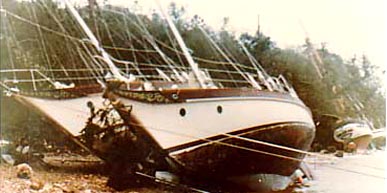
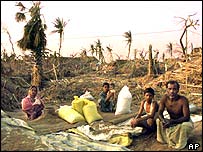
Boats damaged by the cyclone Survivors of the Cyclone
Orissa cyclone satellite image Flooding cause by the Orissa Cyclone 

Solutions

•Preparation and Prediction – The Indian government saw the development of the cyclone on it’s satellites but couldn’t warn people because of low literacy rates (49%), poor access to radios and the isolated nature of many villages.
•Prevention - There are only 27 cyclone shelters in this region for over 20 million people who live in the state. Building codes do not protect buildings against the forces of cyclones.
•Response - It took three days for relief efforts to begin. Five days after the storm, the co-ordination centre consisted of six workers, two telephones and a fax machine. Fishermen have now been issued with radios following the storm so that they can warn each other and people on land if there are future cyclones.
•Aid - India turned down a United Nations offer for an international fund-raiser, but countries including the US, Britain, Canada and Germany sent donations. About $20.8m had been pledged by March. The Indian government tried to deal with the disaster on it’s own initially.

Things to do/find out more

1) Copy the table below into Word and find out the information indicated by visiting the websites hyper linked.

  BBC BAPS Red Cross Wikipedia
Death toll        
Number of cattle dead        
Number of people affected        
Number of trees uprooted        

2) What does this table tell you about the accuracy of information about hazards?

3) What does this table tell you about the accuracy of different wed based media?

4) Which source do you trust the most? Why?

5) Take notes on what the United Nations did for Orissa in terms of Aid


Information about Orissa
You Tube Videos

 
Footage on why future cyclones might cause even more damage, especially with global warming. Watch footage as the Cyclone hits Bhubaneswar, the state capital of Orissa