|
|
||
| Back to Main Page | Back to GCSE Page | Back to Weather and Climate Menu |

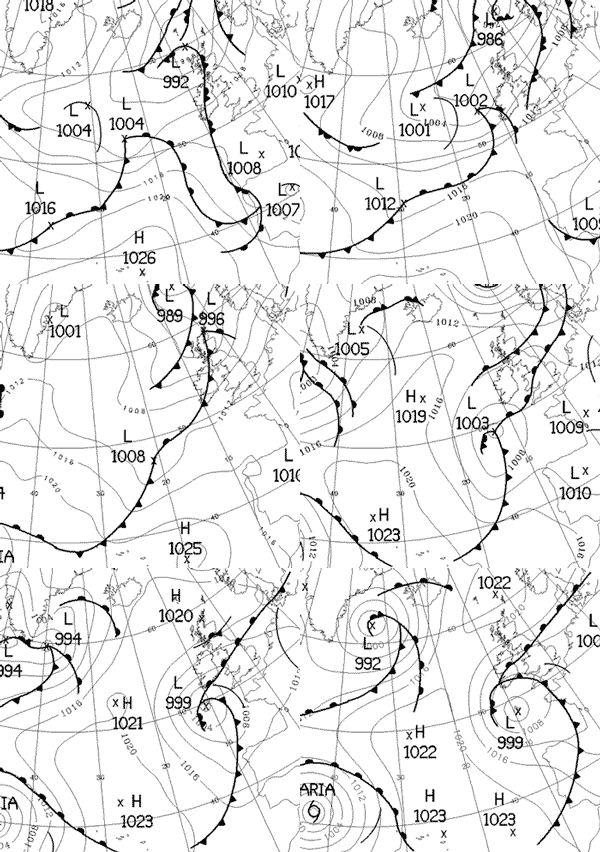
The rising air creates low pressure at the earth’s surface at the centre of the storm. Air rushes in from higher pressure areas around the depression giving the high winds we often associate with depressions. Eventually the cold front catches up with the warm front and an OCCLUDED FRONT is created. View an animated sequence of the life cycle of depression from the Met Office (at the bottom of the page)

Activities
1. Complete the table below using the image above -
|
|
Ahead of the warm front |
Passage of the warm front |
Warm sector |
Passage of the cold front |
Cold sector |
|
Pressure |
|
|
|
|
|
|
Temperature |
|
|
|
|
|
|
Cloud cover |
|
|
|
|
|
|
Wind speed and direction |
|
|
|
|
|
|
Precipitation |
|
|
|
|
|
2. Using the simulation below, describe and explain the life cycle of a depression.
3. Read this information on Depressions and have a go at the activities provided on worksheet 3 and then Worksheet 4
4.
See how air flows in an anticyclone and a depression.
Video
| BBC news on the day of the Great Storm 1987 | Michael Fish gets it wrong! Poor Guy. |